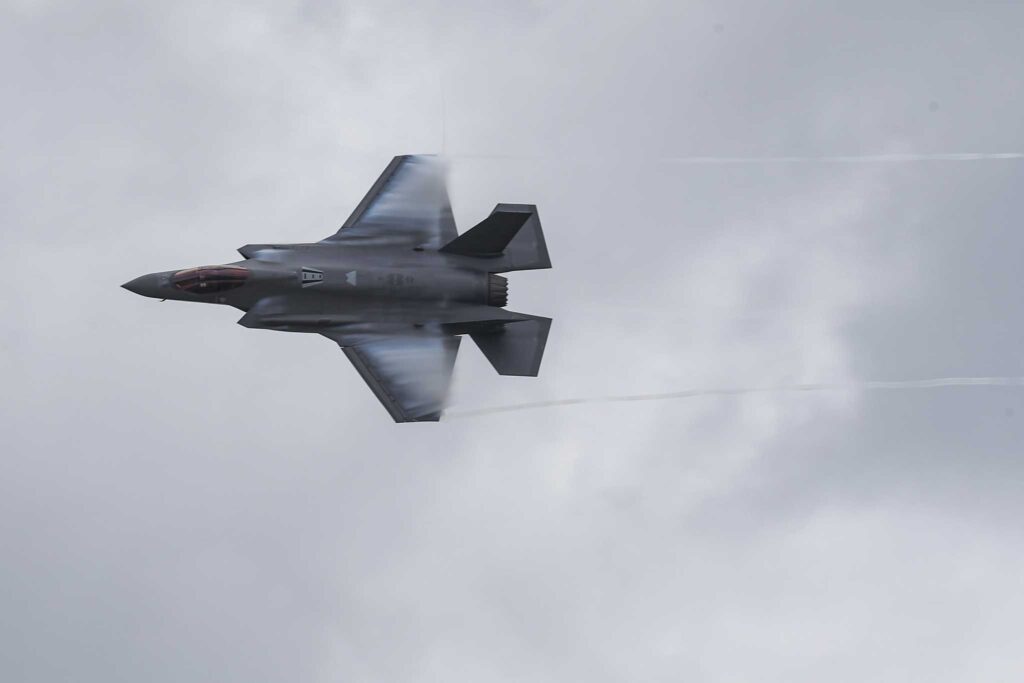
A F-35A Lightning II flies over Randolph Air Force Base in San Antonio. The Air Force has struggled with a shortage of pilots for years. It’s now offering lucrative retention bonuses to keep experienced aviators in the cockpit.
Sam Owens/San Antonio Express-NewsBattling a chronic shortage of pilots, the Air Force is offering annual retention bonuses to veteran aviators that can pay up to $600,000 over their careers.
The most lucrative of the bonuses are for pilots flying bombers, fighters, U-2 spy planes and other high-performanceair craft. They range from $35,000 to $50,000 per year. Pilots can collect as much as $600,000 in bonuses if they agree to extend their service commitment by 12 years.
Advertisement
Article continues below this ad
Spain said the bonuses would preserve critical skills “formed through the crucible of combat and daily execution of high-intensity operations.”
The Air Force ended its 2022 fiscal year 1,907 pilots short of its goal of having 21,000 active-duty and reserve aviators to fly manned aircraft. Figures for the 2022 fiscal year, which ended Sept. 30, were not available.
The service has struggled for years to keep its most experienced pilots in the cockpit. Commercial airlines lure many of them away. That problem eased during the pandemic, when air travel dropped precipitously and airines jobs disappeared. But commercial carriers are hiring again, and the competition for pilots is as intense as ever.
Retired Air Force Gen. Gregory “Speedy” Martin, a former head of U.S. Air Forces Europe and the Air Force Materiel Command, said pilot retention troubles stem in part from the “peace dividend” that came with the end of the Cold War. The Pentagon pared its forces, and the reductions extended to procurement, training and ultimately force readiness.
A quarter century of reduced budgets, a downturn in flying hours from about 20 a month per pilot to eight or 10, and reduced aircraft readiness in an aging fleet have all taken their toll, Martin said. On top of that, two decades of war in Iran and Afghanistan left many pilots burnt out by nonstop deployments.
Advertisement
Article continues below this ad
Some of the Air Force’s planes are based on 60-year-old technology, including the T-38 Talon, the service’s advanced trainer for fighter pilots. The planes, flown in San Antonio, need constant maintenance and frequent overhauls as the Air Force wrestles to produce a replacement trainer, the Boeing–Saab T-7 Red Hawk. Newly commissioned second lieutenants must wait as long as a year to get into flight training, Martin said.
“There’ll be some other people who will say there’s leadership problems or there’s wokeness and all that,” said Martin, 75, of Colorado Springs. “I really don’t see that. I believe that the readiness rates of our aircraft and our flying hours are more important drivers to those people serving their country than the distractions we’re having with wokeness and other pumped-up social controversies.”
The Air Force is offering the bonuses through two programs that improve on past incentives “to shape and retain experienced rate officers.”
The Experienced Aviator Retention Incentive offers pilots with experience flying critical weapon systems bonuses of $15,000 to $50,000 per year to extend their service commitments for periods ranging from three to 12 years.
Pilots can sign up one or two years in advance. Those agreeing to enter the program two years in advance will make the most money: $600,000 in bonuses over 12 years if they fly fighter aircraft, bombers or special operations, rescue, airlift and U-2 surveillance and reconaissance aircraft. A pilot flying one those planes for eight years would earn $400,000 in bonuses.
Advertisement
Article continues below this ad
The package includes nonfinancial incentives: the right to have a preferred geographic assignment, decline an undesired assignment or remain in place.
A pilot flying command and control or surveillance and reconnaissance planes would earn $420,000 in bonuses if they commit to a 12-year service extenson and apply two years early. The bonus would total $280,000 for an eight-year commitment. Aviators who sign up one year early, rather than two, would earn $360,000 in bonuses over 12 years or $240,000 over eight years.
The smallest bonuses target combat systems operators, drone pilots and air battle managers. An air battle manager provides command-and-control to airborne and ground units. They synchronize weapons, sensors and fuel to meet mission needs but they don’t fly aircraft. Personnel in this group can arn bonuses that range from $15,000 annually for three to four years to $30,000 a year for eight to 12 years.
The Air Force also has $100,000 and $200,000 “up-front” options.
“Eligible rated officers who would prefer an up-front payment rather than a yearly bonus may chose that option based on the length of their contract, how early they sign up and what community they belong to,” Air Force spokeswoman Laurel Falls said.
Advertisement
Article continues below this ad
Eligible active-duty aviators have until Aug. 1, 2024 to apply for the enhanced bonuses.