
Lucknow: Whether in cities or villages, submersible pumps are being installed in households without any regulation. While some people waste hours washing their cars, bikes and other vehicles, others use precious drinking water carelessly. At the same time, water mafias are illegally extracting and selling groundwater, further deepening the crisis.
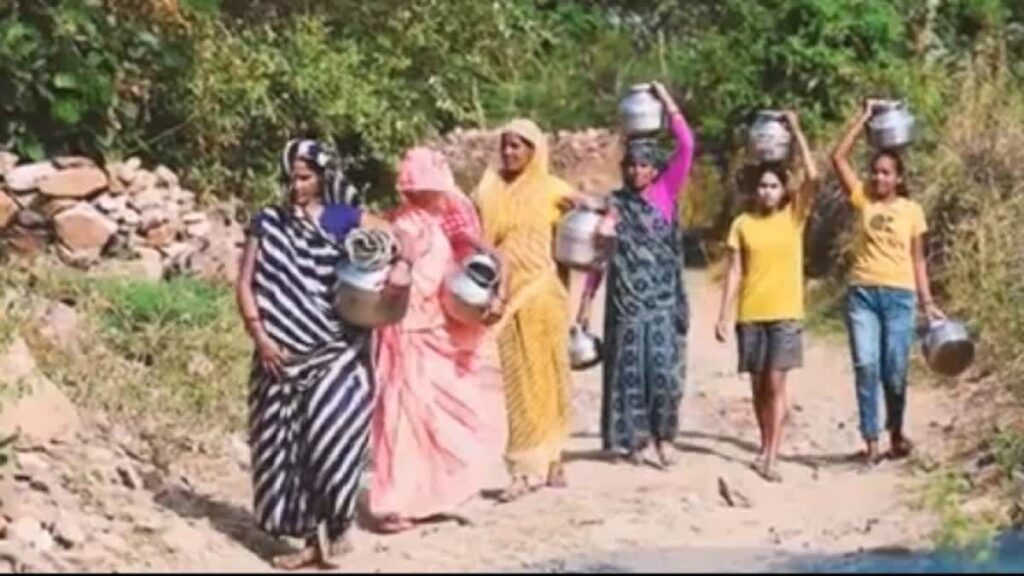
On one hand, water wastage is rampant, while on the other hand, people struggle to fetch water from distant sources. Tube wells, wells and reservoirs are drying up rapidly. As World Water Conservation Day approaches, seminars will once again highlight the importance of saving water.
The harsh reality is that the lack of strict government policies against illegal groundwater exploitation and the unregulated use of submersible pumps are depleting this invaluable natural resource. Meanwhile, natural water recharge sources are diminishing day by day.
The number of village ponds and urban green belts is continuously decreasing. Groundwater levels are plummeting across Uttar Pradesh, from Ghazipur to Ghaziabad and Lakhimpur to Lalitpur. Experts are raising alarming concerns, warning that not just the government, but also the public should be worried about the worsening water crisis.
Current Water Crisis in Uttar Pradesh
The state’s growing population, industrialisation and agricultural dependency have drastically increased pressure on water resources. The situation has reached a critical stage in 900 blocks of Uttar Pradesh.
Due to indiscriminate groundwater extraction, Uttar Pradesh ranks highest in the country for groundwater exploitation. Even in the capital, Lucknow, groundwater levels are depleting at an alarming rate. According to the Directorate of Local Bodies, out of nearly 700 local bodies in the state, 622 rely entirely on groundwater for their water supply.
Worsening Situation in Lucknow
Alok Singh, founder of Sarvebhyo Foundation and a water conservation activist, stated that Lucknow is experiencing the worst water crisis in the state. Approximately 79 billion litres of water are extracted annually. The Jalkal department supplies 35.6 crore litres of water daily through tube wells. Additionally, thousands of crores of litres are drawn from nearly one lakh submersible pumps and deep borewells installed in multi-story buildings, hotels, hospitals, industrial areas, government and private offices, railways, and residential homes.
Declining Groundwater Levels
According to the Central Ground Water Board (CGWB), several districts in Uttar Pradesh witness an annual groundwater decline of 10-20 centimetres. The 2017 resource assessment classified nine districts–Agra, Amroha, Firozabad, Gautam Buddha Nagar, Ghaziabad, Hapur, Hathras, Sambhal and Shamli–as “over-exploited,” means groundwater extraction exceeded 100%.
In Ghaziabad, the exploitation rate has reached 128%. Block-wise data from 2020-2025 indicates that groundwater depletion has reached critical levels in 900 blocks across the state. In the Ganga basin regions, groundwater usage has surpassed the safe limit of 70%.
Crisis in Major Rivers
Rivers such as the Ganga, Yamuna and Gomti are suffering from pollution and reduced water flow. Industrial waste and sewage continue to contaminate the Ganga, while the Yamuna is nearly disappearing in Uttar Pradesh after flowing through Delhi. The Gomti River, especially in Lucknow, remains highly polluted.
Despite efforts under the Namami Gange project, success in improving water levels has been limited. Riddhi Kishore Gaur, a conservationist working for the Gomti, highlighted that untreated sewage continues to pollute the river. Although a sewage treatment plant was constructed at Hyder Canal, it remains non-operational, allowing untreated waste to flow into the river.
Efforts for Water Conservation
The state government has launched several initiatives to tackle the water crisis, but their effectiveness remains questionable.
Water Harvesting and Regeneration Schemes
Under the Atal Bhujal Yojana (2020-2025), groundwater management projects are underway in 10 districts. The Khet Talab Yojana provides farmers with a 50% subsidy to build ponds, but implementation at the rural level remains slow. Despite the government’s claims and significant budget allocations, visible results on the ground are minimal, with reports of corruption surfacing.
Awareness Campaigns
Programmes such as ‘Jal Shakti Abhiyan’ and ‘Catch the Rain’ have encouraged people to adopt rainwater harvesting. While urban impact is limited, rural areas have seen some success. Experts argue that these initiatives lack continuity.
Under the Jal Jeevan Mission, 90% of rural households in Uttar Pradesh have received tap water connections as of 2025 (compared to 16.6% in 2019). While the scheme has been beneficial, concerns remain regarding water quality and supply consistency.
Brijraj Yadav, Executive Director of Jal Jeevan Mission, stated, “We are not just providing water but actively working on conservation. Efforts are being made to prevent leakage in tanks and pipelines, and small-scale plumbing jobs are being created to reduce water wastage. Additionally, awareness campaigns are regularly conducted in villages.”
Water Quality Concerns
Polluted water containing arsenic and fluoride is a major issue in rural areas, while outdated pipelines lead to water contamination in urban regions. In Kanpur, Bundelkhand and western Uttar Pradesh, rising sodium arsenic levels pose serious health risks.
With depleting groundwater, polluted rivers, and insufficient conservation efforts, Uttar Pradesh faces an impending water crisis. Urgent and effective measures are needed to prevent a severe shortage in the near future.
Read more: Water May Become The New Fuel: Environmentalist Anil Joshi Warns Of A Looming Threat