
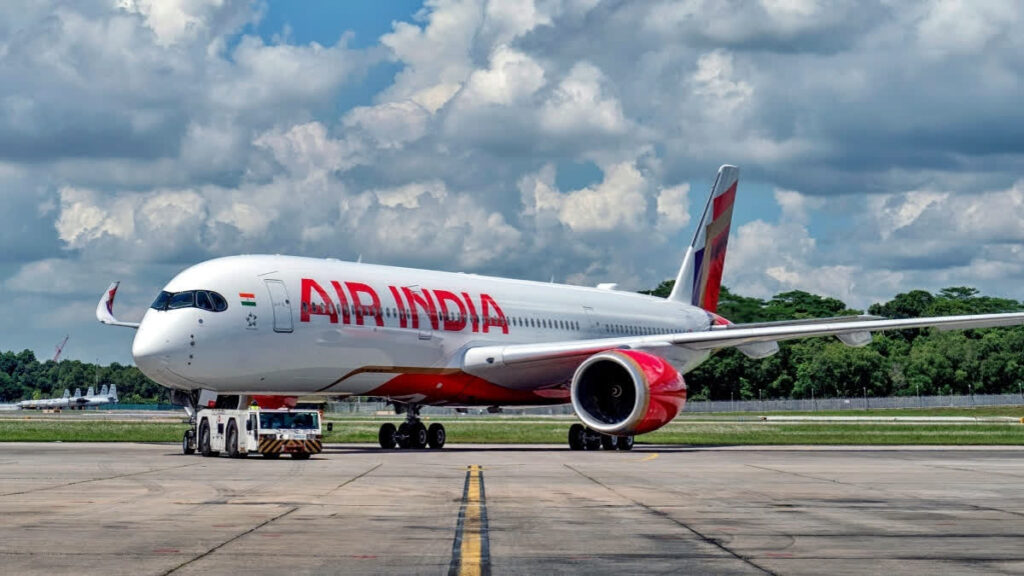
New Delhi: India’s aviation sector is struggling with a significant pilot shortage, which has increased from the high cost of pilot training. The issue has come under the purview of investigation after a recent discussion in the Lok Sabha, where the Centre admitted that it has received a representation from the Airlines’ Association of India (ALPA). Representation specifically exposed high costs associated with type rating, which is an essential certification for pilots to operate specific aircraft types.
Government’s response
In response to the concerns raised, the Minister of State for Civil Aviation, Muralidhar Mohol said that while the government has received the representation of ALPA on the regulation of training cost, there is no proposal to regulate such fees at present. He emphasized that pilot training programs are highly special and their costs are affected by many factors, including: The high cost of aviation fuel (AvGas 100LL)
The use of imported aircraft for training
Expensive aircraft spare parts
The cost of imported flight simulators
The number and type of aircraft used in training
Additionally, he claimed that there was not a lack of competent pilots in the airlines while there was a justification of increased need for pilots over the next 10 years, based upon industry data.
Pilot Shortage: A Growing Concern
Despite the government claiming that there is no apparent shortage of qualified pilots, data from the Directorate General of Civil Aviation (DGCA) reflects the opposite. The total number of Commercial Pilot Licenses (CPL) issued in 2024 fell by 17 per cent in comparison to 2023, with a total of 1,342 CPLs issued, compared with the prior year’s tally of 1,622 CPLs issued. 2023 had an unprecedented increase in wait time for CPLs issued, an increase of 40 per cent from CPLs issued in 2022, which again leads to a lack of concern for future availability of pilots in the work-force as the total of CPLs issued have fallen.
ALPA India President Sam Thomas expressed his concerns over the government’s stance, stating, “We are a little confused with the minister’s statement in Parliament. He categorically states that there is no pilot shortage. He has only said that we would require a large number of pilots in the near future. How are we going to bridge the gap? This can only be done by industry subject matter experts and associations like ALPA India, which has a wealth of professional and vast experience.”
Projected Demand for Pilots
The demand for pilots is expected to surge over the next decade:
Air India: 5,870 pilots needed
SpiceJet: 1,630 pilots needed
Air India Express: 2,196 pilots by FY 2028
IndiGo: 11,778 pilots needed
Impact of High Training Costs on Pilot Shortage
The aviation industry has been facing issues regarding the high cost of pilot training. ALPA India has mentioned that these costs are parasitizing pilot trainees and are stopping many from becoming pilots.
Varun Chakrapani, an ALPA Captain, pointed out the adverse effects of the current situation. “There is a degrowth last year. This is due to high upfront investment costs due to profiteering by airlines in giving type ratings at subsidized rates or even market price.” He added that with a shortage of pilots, airlines are squeezing existing pilots with punishing schedules rather than improving working conditions and perks. “This again makes pilots leave in pursuit of a better lifestyle and pay. Shortage of pilots leads to fatigued pilots flying four sectors a day, leading to a severe impact on flight safety,” he claimed.
Chakrapani also cited recent safety incidents as evidence of systemic pilot fatigue. “Attempted taxiway takeoff by an AI pilot and several tail strikes during landing by IndiGo recently all point to cumulative fatigue experienced by pilots,” he added.
Lack of Government Intervention in Financial Assistance
Despite these rising concerns, Minister Mohol has said there are no plans at present to introduce a program to promote financial assistance, lending, or subsidized loans to pilot trainees, even if they suffer from economic drawbacks.
The absence of financial assistance is a huge issue. Given that the cost of pilot training can be upwards of ₹1 crore, many aspiring pilots will be unable to afford the training they would like to pursue without some sort of major financial help.
As Indian aviation is expected to exponentially grow in the coming years, there is a need to identify a solution to close the gap between the supply of pilots and demand for pilots.Industry stakeholders are calling for urgent response measures, including but not limited to:
Monitoring the costs of training to support against economic distress
Establishing financial assistance policies, such as subsidized loans or scholarships, to support aspiring pilot trainees
Collaboration within the industry to identify a sustainable approach to pilot training to endlessly supply trained pilots without students facing economic distress.